It’s one of the most common calls we get from private well owners in Lehigh Acres and the surrounding rural stretches of Lee County: a rotten-egg smell coming out of the tap, sometimes only on the hot side, sometimes everywhere. It’s unpleasant, it’s usually harmless to health at typical concentrations, and it’s also quietly corrosive to your plumbing and fixtures the longer it goes untreated.
What’s Actually Causing the Smell
The odor is hydrogen sulfide gas, produced by naturally occurring sulfur bacteria living in the aquifer or in the well itself. It’s a common feature of groundwater across rural Lee County, not a sign anything is broken. There’s a second, separate source worth ruling out too: a magnesium anode rod inside your water heater can react with sulfate in the water to produce hydrogen sulfide right there in the tank, which is why the smell is sometimes noticeably stronger on the hot side than the cold.
Test Before You Treat
Those two causes call for different fixes, so figuring out which one you have comes first. A simple way to narrow it down: run only the cold tap for a minute and smell it, then run only the hot tap and smell that. Odor on both sides points to the source water itself. Odor only on the hot side points toward the anode rod reaction inside the water heater — in which case swapping the anode for an aluminum or powered version can resolve it on its own, cheaply, without treating the whole house’s water supply. If it’s coming from both hot and cold, or the anode swap doesn’t fix it, the sulfur is coming from the well and needs actual treatment, not a workaround.
Sulfur Filtration: Air-Injection Oxidation
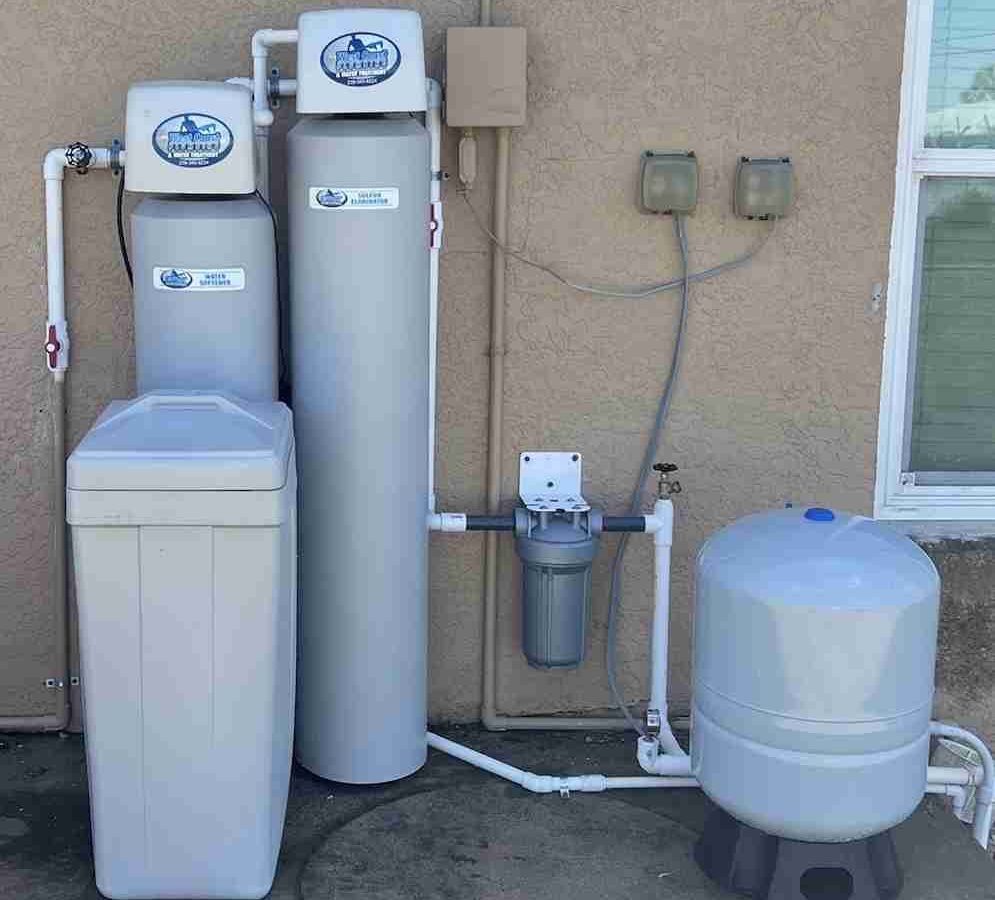
A dedicated sulfur filter system treats the water as it enters the home, using an air-injection chamber to oxidize hydrogen sulfide gas into solid particles. Those particles are trapped in a filtration media bed and flushed out automatically during backwash cycles — no chlorine or chemicals involved, and no ongoing dosing to manage. It’s the standard fix for a well with sulfur as the primary issue, and it’s frequently paired with a water softener in the same cabinet when hardness is present too, which it usually is out here.
Ozone Treatment: When More Is Going On
For wells dealing with sulfur alongside iron, manganese, or bacteria, ozone treatment is worth a look. Ozone is one of the strongest oxidizers available, generated on demand and injected into the water, where it oxidizes sulfur, iron, and manganese into removable particles while also disinfecting against bacteria and viruses — all without adding chlorine or leaving chemical residue, since ozone simply breaks back down into oxygen once its work is done. A post-filter is still needed afterward to physically remove what the ozone has oxidized.
What About Bacteria in the Well Itself?
Sulfur-producing bacteria live naturally in soil and groundwater, and while they’re the source of the smell, they’re generally not the same thing as the harmful bacteria a boil-water notice warns about. That said, a well is also where surface contamination can get in if the casing or cap is damaged, particularly after heavy rain or flooding. If sulfur odor shows up suddenly rather than gradually, or appears alongside cloudy water, it’s worth having the well checked for more than just sulfur content.
Living with a Sulfur Well
- Don’t ignore it as just a smell. Hydrogen sulfide is corrosive to pipes, fixtures, and water-using appliances over time, on top of being unpleasant.
- Retest periodically. Aquifer conditions shift with drought, heavy rain, and nearby development, so a well that tested fine a few years ago can change.
- Keep media serviced. Sulfur filter media typically lasts five to ten years depending on water quality and usage, and an annual professional check keeps the system performing as designed.
Whichever route fits your well, the goal is the same one covered across our water treatment services: matching equipment to what your specific water actually needs, not a one-size-fits-all system.
Well Water Treatment in Lehigh Acres and Rural Lee County
West Coast Plumbing & Water Treatment tests and treats sulfur, iron, and hardness issues for well owners throughout Lehigh Acres and rural Lee County. Free estimates; licensed and insured (FL Lic. CFC 1427865). Call (239) 340-8224 or schedule a water test.