A garbage disposal makes it tempting to treat the kitchen sink like a second trash can, and that habit is exactly what shortens its life and clogs the drain line behind it. A busy Cape Coral kitchen puts a disposal through real work — here’s what should never go into it, and what actually keeps one running.
A disposal only grinds food into smaller pieces — it doesn’t dissolve anything or make it disappear. Everything that goes down it still has to travel through the kitchen drain line afterward, which is why what you feed it matters as much for the pipe behind it as for the unit itself.
What Never Belongs in the Disposal
- Grease and cooking fat. It goes down warm and liquid, then cools and hardens on the pipe wall a few feet downstream where you can’t see it happening. Pour it into a container and toss it instead.
- Fibrous vegetables. Celery, corn husks, and onion skins have stringy fibers that wrap around the disposal’s blades instead of shredding cleanly, jamming the motor.
- Starchy foods. Pasta, rice, and potato peels continue to absorb water and expand after they’re ground up, which can swell into a clog well past the disposal itself.
- Coffee grounds. They don’t break down in water — they compact into a dense, sludge-like layer that settles in the trap and the line below it.
- Bones and fruit pits. Both are too hard for the disposal’s blades and grind ring, risking damage to the motor rather than actually processing.
- Anything non-food. Glass, plastic wrap, twist ties, and produce stickers don’t belong anywhere near the drain, disposal or not.
Habits That Extend Disposal Life
Run cold water before, during, and after using the disposal — cold water keeps grease semi-solid so it gets chopped and flushed through rather than melting and coating the pipe. Feed food in gradually instead of dumping a full plate in at once, and let the disposal finish clearing before adding more. Running ice cubes with a bit of citrus peel through it occasionally helps knock buildup off the blades and freshens the smell. And never pour a chemical drain cleaner into a disposal — the caustic chemicals that attack a clog are just as hard on the disposal’s internal seals and components.
When the Drain Backs Up Anyway
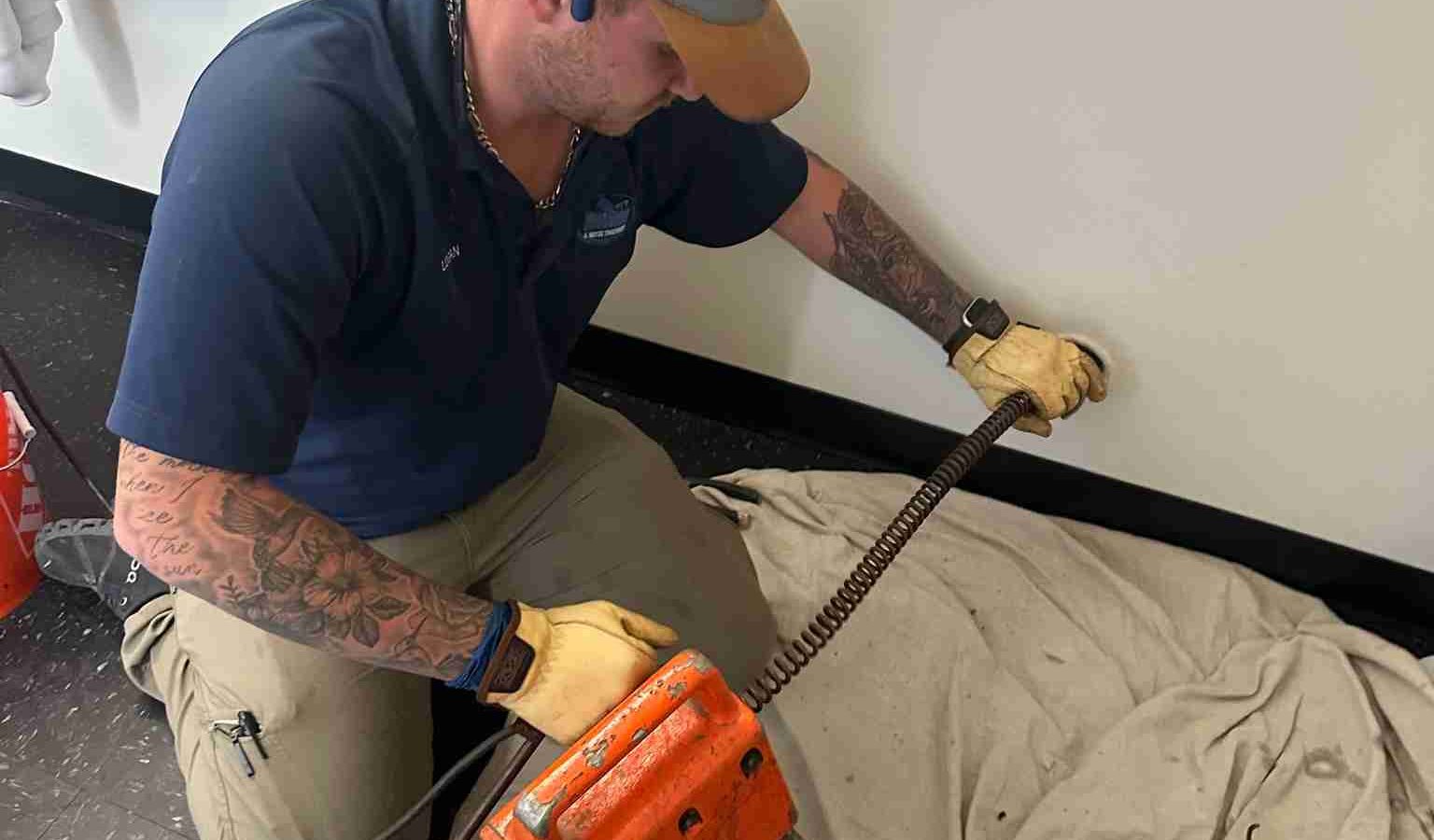
Even careful habits don’t stop every bit of grease and food particle from making it into the line over years of use. If the kitchen sink is draining slower than it used to, or backs up periodically no matter how careful you are, professional drain cleaning clears the buildup mechanically rather than just pushing it further down the pipe the way a store-bought chemical treatment does.
Repair or Replace?
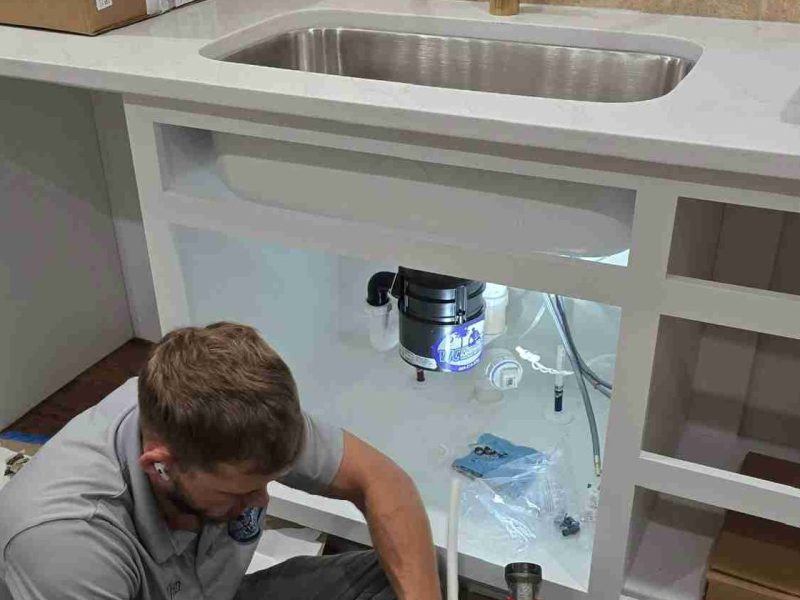
A disposal that hums but doesn’t spin is usually just jammed — many models have a small reset button underneath, and a hex wrench inserted into the bottom can often free a stuck impeller by hand. Water leaking from underneath the unit, though, usually means a worn internal seal, and that’s a sign the disposal is at the end of its service life rather than something worth patching. Persistent odor that doesn’t clear up after cleaning, unusual grinding noise, or a unit that’s noticeably weaker than it used to be are all signs worth having looked at before it fails outright. Our fixture repair and installation team can tell you which situation you’re in and get a replacement installed the same visit if that’s what it needs.
If your household regularly cooks in volume — holidays, entertaining, a larger family — and the existing disposal jams often, it may simply be undersized for how the kitchen is actually used. A more powerful continuous-feed unit sized to the household solves what a repair on the old one won’t.
A Word on Chemical Drain Cleaners
It’s tempting to reach for a bottle from the store the moment a kitchen drain slows down, but caustic drain cleaners generate heat as they work and can damage rubber gaskets, older pipe material, and the disposal’s internal seals with repeated use. On a real blockage, they often just sit in standing water without reaching the clog at all. They’re worth skipping in favor of mechanical cleaning that actually removes the buildup rather than attacking the pipe along with it.
Drain and Disposal Service in Cape Coral
West Coast Plumbing & Water Treatment clears kitchen drains and repairs or replaces garbage disposals for homes throughout Cape Coral and Southwest Florida. Free estimates, 24/7 emergency service, licensed and insured (FL Lic. CFC 1427865). Call (239) 340-8224 or contact us online.