A water softener that’s quietly failing doesn’t usually announce itself. There’s no alarm, no leak on the floor — just hard water slowly creeping back into a Bonita Springs home until the signs are too obvious to ignore. Here’s what to watch for, and what’s usually behind it.
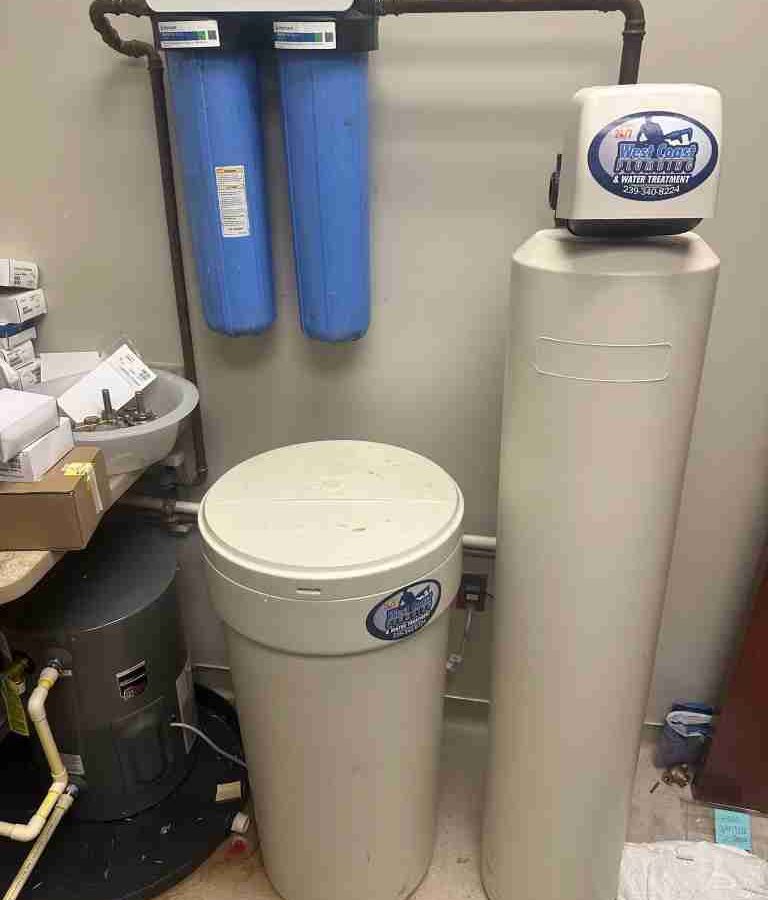
A quick reminder of how the equipment is supposed to work makes the failure signs easier to interpret. Hard water passes through a resin tank where beads coated in sodium ions trade places with the calcium and magnesium causing the hardness. Once the resin’s capacity is used up, the control valve triggers a regeneration cycle, flushing the resin with brine from the salt tank to recharge it for the next round. Every symptom below traces back to one step in that cycle breaking down.
6 Signs Your Water Softener Needs Service
- Spots and film are back on dishes and glassware. If glasses are coming out of the dishwasher cloudy again, or you’re seeing white spotting on faucets and shower doors, the softener isn’t removing hardness minerals the way it used to.
- Soap and shampoo won’t lather like they used to. Hard water reacts with soap to form scum instead of suds. If you’re using more soap or shampoo for the same result, that’s a hardness problem, not a product problem.
- The brine tank salt level isn’t dropping. Salt should decrease gradually as the system regenerates. If it sits at the same level month after month, either the system isn’t regenerating on schedule or a hardened salt bridge has formed in the tank, blocking the brine from reaching the water.
- Water feels different — skin dry, laundry stiff. Soft water has a distinct, slightly slick feel and leaves skin, hair, and fabric noticeably softer. Losing that feel is often the first thing people notice before they connect it to the equipment.
- Scale is reappearing on fixtures, or the water heater seems to be working harder. Visible white buildup on showerheads and faucet aerators, or a water heater that takes longer to deliver hot water, both point to hardness minerals getting through untreated.
- The system runs constantly or regenerates unusually often. A softener cycling far more than its normal schedule, or one that never seems to stop running, usually has a stuck valve, a bad sensor, or a resin bed that’s no longer holding a charge.
What to Check First
Before assuming the worst, look in the brine tank for a salt bridge — a hardened crust that forms above the water level and keeps salt from dissolving properly, even though the tank looks full. Breaking it up by hand often solves the problem immediately. If your home lost power during a storm or a longer outage, the control valve’s programming and internal clock can reset, throwing off the regeneration schedule until it’s reprogrammed. And if the system is more than 10 to 15 years old, the resin bed itself may simply be worn out and no longer capable of holding a full charge of sodium ions, regardless of how much salt you feed it.
Why Sizing and Settings Actually Matter
A softener that was correctly sized when it was installed can still fall short years later if the household has grown, if water use habits have changed, or if the unit was never programmed for your water’s actual hardness level to begin with. Capacity depends on how many grains of hardness the resin can remove between regenerations, which in turn depends on your household’s daily water use and how hard your specific water actually tests. A softener regenerating on a generic factory schedule instead of one matched to your real hardness and usage will often seem to be “failing” when it’s really just undersized or misconfigured for the water it’s being asked to treat.
When It’s Time to Replace, Not Just Service
If a water softener is aging out and you’re tired of the monthly salt runs and brine tank upkeep, it’s worth a look at the salt-free alternative before simply replacing like-for-like. A HALO whole-house system conditions hardness minerals instead of removing them through ion exchange, which means no brine tank, no salt bags, and no standing service appointment — a different approach worth weighing against a straightforward softener replacement, especially if your home is on municipal water.
Water Softener Service in Bonita Springs and Across SWFL
West Coast Plumbing & Water Treatment services, repairs, and replaces water softeners for homes in Bonita Springs and throughout Southwest Florida, and we’ll test your water before recommending anything so you’re not guessing at what’s actually wrong. Free estimates; licensed and insured (FL Lic. CFC 1427865). Call (239) 340-8224 or contact us online.