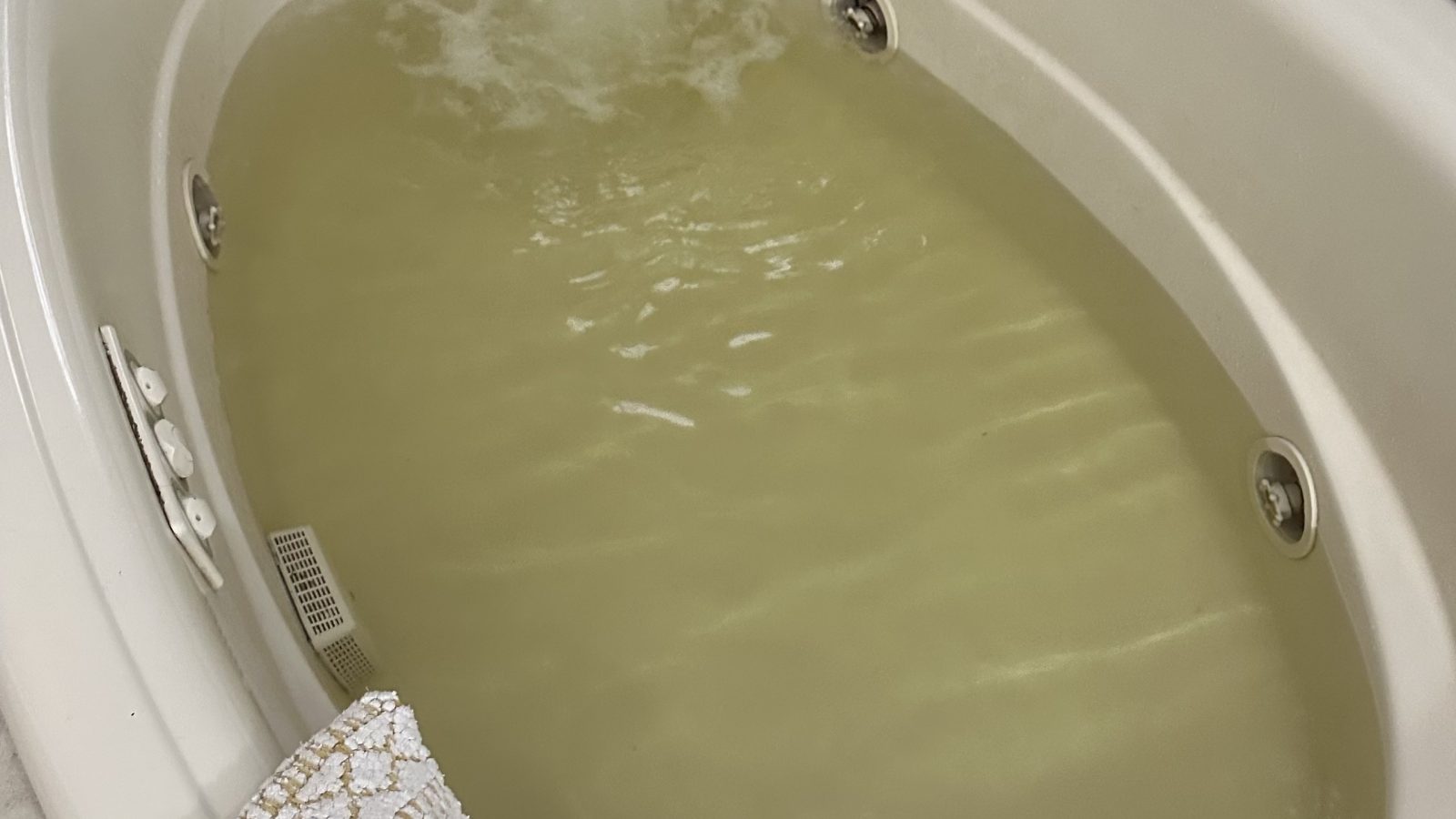
The tub looks clean when you fill it, but a rust-orange ring forms around the drain by the next day. White laundry comes out with faint orange streaking. A glass of water tastes faintly metallic. For well owners in North Fort Myers, all three point to the same culprit: iron dissolved in the groundwater.
It’s one of the more common well water complaints in this part of Lee County, and one of the more visible — unlike hardness or sulfur, which you mostly notice by feel or smell, iron leaves behind a stain you can point to.
Why Well Water Turns Fixtures Orange
Iron comes out of the ground dissolved in the water and essentially invisible — it’s called ferrous iron, and a fresh glass can look perfectly clear. Once that water is exposed to air, the iron oxidizes into ferric iron, the reddish-orange form you actually see as rust. That’s why the staining shows up on porcelain, tile, and fabric — surfaces where the water sits and has time to react with air — well before you’d notice anything by looking at a glass straight from the tap.
Iron vs. Iron Bacteria
There’s a second, related problem worth telling apart from plain dissolved iron: iron bacteria. These organisms feed on iron in the water and leave behind a slimy, reddish-brown buildup in toilet tanks, on well components, and inside pipes — a different texture and pattern than simple mineral staining. Iron bacteria generally needs a different pretreatment approach than dissolved iron alone, which is one more reason testing matters before buying equipment.
Testing Comes First
Iron levels vary significantly from well to well, even between neighboring properties, and hardness is almost always present alongside it in North Fort Myers groundwater. A water test establishes the actual iron concentration, whether hardness needs addressing too, and whether iron bacteria is part of the picture — all of which determine what equipment actually solves the problem instead of just filtering some of it.
How Iron Filtration Works
A dedicated iron filter system uses air injection oxidation or catalytic filtration media to convert dissolved iron into solid particles as the water passes through, trapping them in the media bed and flushing them out automatically during backwash — chemical-free and largely hands-off once it’s installed and sized correctly. These systems are typically rated for iron levels up to around 10 parts per million; wells running hotter than that, or dealing with iron bacteria specifically, may need additional pretreatment ahead of the main filter.
Order matters when iron and hardness are both present. The iron filter is installed ahead of the softener, not after, so the iron is oxidized and removed before that water ever reaches the softener’s resin bed. Send iron-laden water into a softener first and the resin bed fouls with iron deposits, losing capacity and shortening its service life — which is a common reason an otherwise fine softener seems to stop working on a well that has iron in the mix.
Protecting the Rest of Your Water
- Iron and hardness usually travel together in local well water, so iron filtration is frequently paired with a softener in a single system rather than treating each separately.
- Media has a service life. Filtration media typically lasts five to ten years depending on iron concentration and water usage, and a professional inspection catches a bed that’s losing capacity before staining returns.
- It’s part of a bigger picture. Iron is one of several issues common to rural SWFL wells, alongside hardness, sulfur, and sediment — our water treatment services address whichever combination your specific water actually has.
Signs You May Be Dealing With Iron Bacteria
A slimy, reddish-brown coating inside a toilet tank, a faint swampy or oily odor separate from a metallic taste, or staining that appears with a rainbow-like sheen on the water’s surface are all signs pointing toward iron bacteria rather than dissolved iron alone. It’s a distinction worth mentioning when you schedule a water test, since it changes what pretreatment the system needs before it can perform the way it’s supposed to.
Iron Filtration for North Fort Myers Well Water
West Coast Plumbing & Water Treatment tests and treats iron, hardness, and iron bacteria for well owners throughout North Fort Myers and rural Lee County. Free estimates; licensed and insured (FL Lic. CFC 1427865). Call (239) 340-8224 or schedule a water test.