Estero homeowners shopping for water treatment usually run into two very different-sounding options — reverse osmosis and whole-house filtration — and assume they’re competing for the same job. They’re not. One purifies water at the molecular level; the other conditions it so it stops damaging your plumbing and appliances. Knowing which problem you’re actually solving makes the choice a lot easier.
What Reverse Osmosis Actually Does
Reverse osmosis forces water through a semi-permeable membrane fine enough to reject dissolved solids, heavy metals, nitrates, fluoride, and other contaminants down to a molecular scale — typically reducing total dissolved solids by up to 95 to 99%. Water first passes through sediment and carbon pre-filters that strip out larger particles and chlorine to protect the membrane, then through the membrane itself, and finally through a polishing filter before it’s stored in a pressurized tank ready to use. It’s the highest level of purification available for residential water, and it comes in two forms depending on how much of your home’s water you want treated that thoroughly.
Under-Sink RO: Purest Water at One Tap
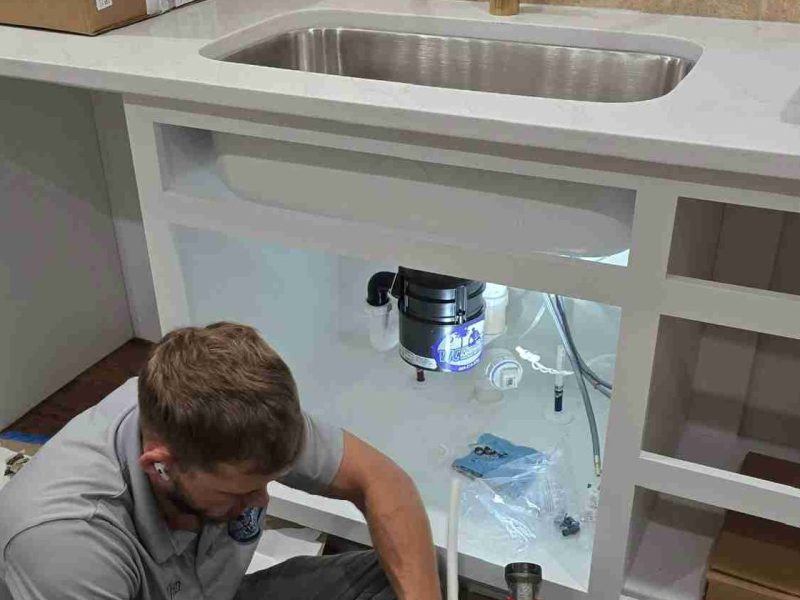
An under-sink reverse osmosis system installs in the kitchen cabinet and delivers purified water through a dedicated faucet, treating only the water you drink and cook with. It’s the practical choice for most households — compact, less expensive than treating every gallon in the house, and ideal for drinking water, coffee, and baby formula, without touching the water used for showers, laundry, or irrigation.
Whole-House RO: Purified Water at Every Fixture
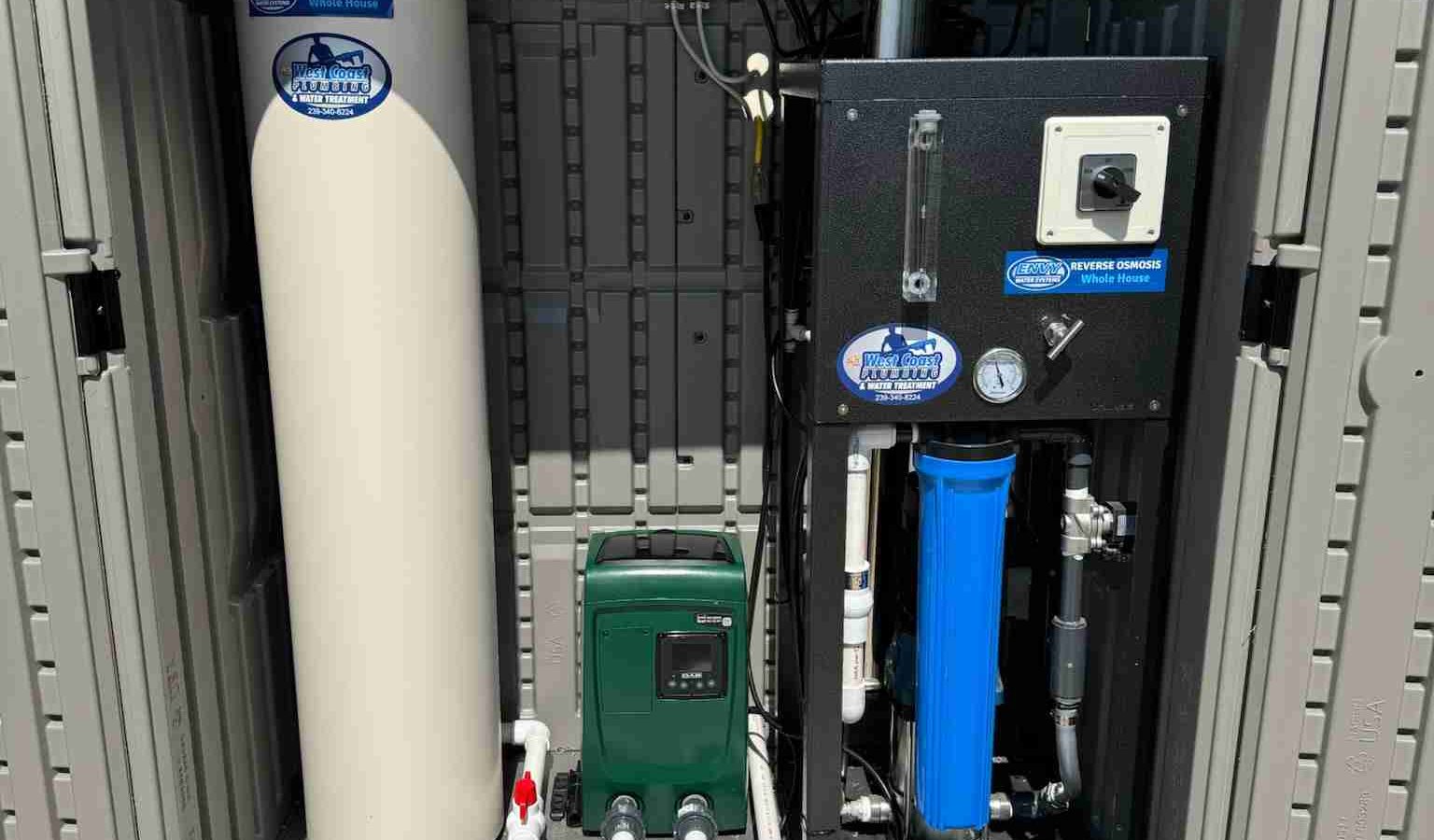
A whole-house reverse osmosis system puts that same level of purification at the point where water enters the home, so every shower, faucet, and appliance gets it. It makes sense for households dealing with heavily contaminated well or municipal water, or anyone who wants the highest standard of water quality throughout the property, not just at the kitchen tap. It’s a bigger investment, and because hardness minerals can scale and damage the RO membrane, it’s usually paired with a water softener ahead of it to protect the system.
Whole-House Filtration: A Different Job Entirely
This is where the confusion usually starts. A whole-house filtration and conditioning system like HALO isn’t trying to purify your water to drinking-fountain purity — it’s built to stop scale from depositing on your pipes, water heater, and fixtures, and to pull chlorine taste and odor out of municipal water. It doesn’t reduce total dissolved solids or strip out contaminants the way RO does, and it isn’t meant to. Its job is protecting the plumbing and appliances the water passes through, not re-engineering the water itself.
How to Decide, or Combine Both
- If your concern is drinking water quality — taste, contaminants, or peace of mind at the tap — under-sink RO solves it directly and affordably.
- If your concern is scale, chlorine odor, or protecting plumbing and appliances house-wide — whole-house filtration is the right tool, and it’s the one most Estero homes on city water actually need.
- If your raw water is severely contaminated — nitrates, heavy metals, or a well with real quality issues — whole-house RO covers every fixture at the highest purification level available.
- Many homes run both — whole-house filtration protecting the plumbing, and under-sink RO delivering the cleanest possible water at the kitchen faucet.
A water test is the honest starting point either way — it tells you what’s actually in your water before you pay for equipment sized to solve the wrong problem.
Maintaining Whichever System You Choose
Both approaches need upkeep, just on different schedules. An RO system’s sediment and carbon pre-filters typically need replacing every 6 to 12 months, with the membrane itself lasting 2 to 3 years before it needs swapping out — skip that maintenance and the system’s purification quality quietly declines well before it stops working outright. Whole-house filtration systems need less frequent attention but still benefit from an annual check to confirm media life and, for salt-based systems, that the brine tank and control valve are cycling correctly.
Water Treatment Systems for Estero and Southwest Florida
West Coast Plumbing & Water Treatment tests water and designs treatment for Estero homes and across SWFL, whether that’s a drinking-water RO system, whole-house filtration, or both working together. Free estimates; licensed and insured (FL Lic. CFC 1427865). Call (239) 340-8224 or contact us online.