You snaked the shower drain in the spring and it is slow again. The kitchen sink backs up every few months no matter how careful you are. When a drain keeps clogging, the problem is rarely the clog you keep removing — it is a condition in the line that makes new clogs inevitable. In Southwest Florida, a handful of local causes explain most repeat offenders.
Five Reasons SWFL Drains Clog Again and Again
1. Hard water scale in the drain line
Our mineral-heavy water leaves deposits on the inside of drain lines the same way it does in a water heater. That rough, narrowed surface gives soap, grease, and hair something to catch on — so debris that would flush straight through a clean pipe starts building instead. It is why hard-water homes clog more often than the same house would elsewhere, and why water softening quietly reduces drain calls.
2. Grease, and what actually happens to it
Cooking grease goes down warm and liquid, then cools and hardens on the pipe wall a few feet out where you cannot see it. Every subsequent pour adds a layer. Hot water and dish soap do not solve this — they just move the problem farther down the line. Scrape grease into the trash instead of the sink.
3. Tree and shrub roots
Roots grow year-round in our climate, and they find the moisture at any crack or loose joint in a sewer line. Once inside, they form a mesh that catches everything passing through. Cutting them clears the line; it does not remove the entry point, which is why root clogs return on a schedule until the pipe is repaired.
4. Sand, sediment, and shifting soil
Sandy SWFL soil migrates into damaged lines and settles in low spots. Ground movement and heavy seasonal rain can also leave a section of pipe with a belly — a sag where water and solids pool instead of flowing. A bellied line will clog forever until it is re-graded.
5. Flushable wipes and the rest of the myth
Wipes marketed as flushable clear the toilet and then do not break down. They snag on roots, scale, and any rough spot, and they are among the most common causes of full main line blockages. Nothing but toilet paper and human waste belongs in the toilet — that includes paper towels, cotton swabs, dental floss, and cat litter.
When It Is Not the Drain — It Is the Main
One slow fixture is a fixture problem. These signs point at the main sewer line instead:
- Several fixtures draining slowly at once
- A toilet that gurgles when the washing machine or shower drains
- Water appearing at a floor drain or tub when another fixture is used
- Sewer odor indoors or a soggy, unusually green patch in the yard
Any of these warrants a video camera line inspection. Putting a camera down the line replaces guesswork with a picture of the actual roots, belly, or break — so the repair addresses the cause rather than clearing the same blockage a fourth time.
Why Chemical Drain Cleaners Make It Worse
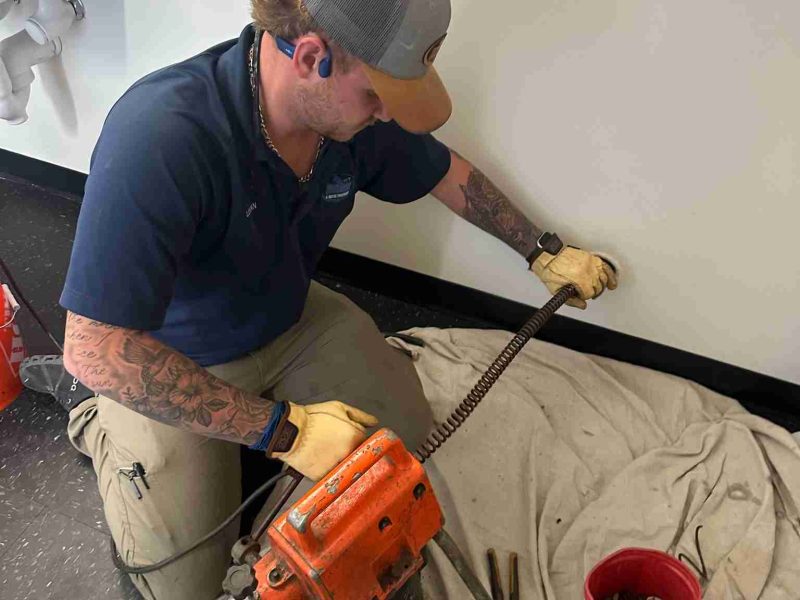
Caustic cleaners generate heat and attack the pipe as readily as the clog, damaging older material and rubber gaskets over repeated use. On a full blockage they simply sit in standing water. Professional drain cleaning — augers and hydro jetting — removes the buildup mechanically and can scour the pipe wall back to a smooth surface, which is what actually breaks the repeat-clog cycle.
Keeping Drains Clear
Use strainers in every sink and tub, keep grease out of the kitchen line, flush only toilet paper, and run plenty of cold water when using the disposal. More plumbing tips are on our site.
Drain Cleaning Across Southwest Florida
West Coast Plumbing & Water Treatment clears and diagnoses drains for homes and businesses in Fort Myers, Cape Coral, Naples, Lehigh Acres, and across SWFL — with camera inspection to find the real cause when the same drain keeps coming back. Free estimates, 24/7 emergency service, licensed and insured (FL Lic. CFC 1427865). Call (239) 340-8224 or schedule service.